Iowa OWI Refusal: 5 Things You Must Know About Consent
Under Iowa’s implied consent law, drivers agree to chemical testing if suspected of OWI. Refusing a breath test results in a one-year license revocation for a first offense. While refusal creates administrative penalties, it is not an automatic conviction; defense strategies often focus on challenging the legality of the initial stop.
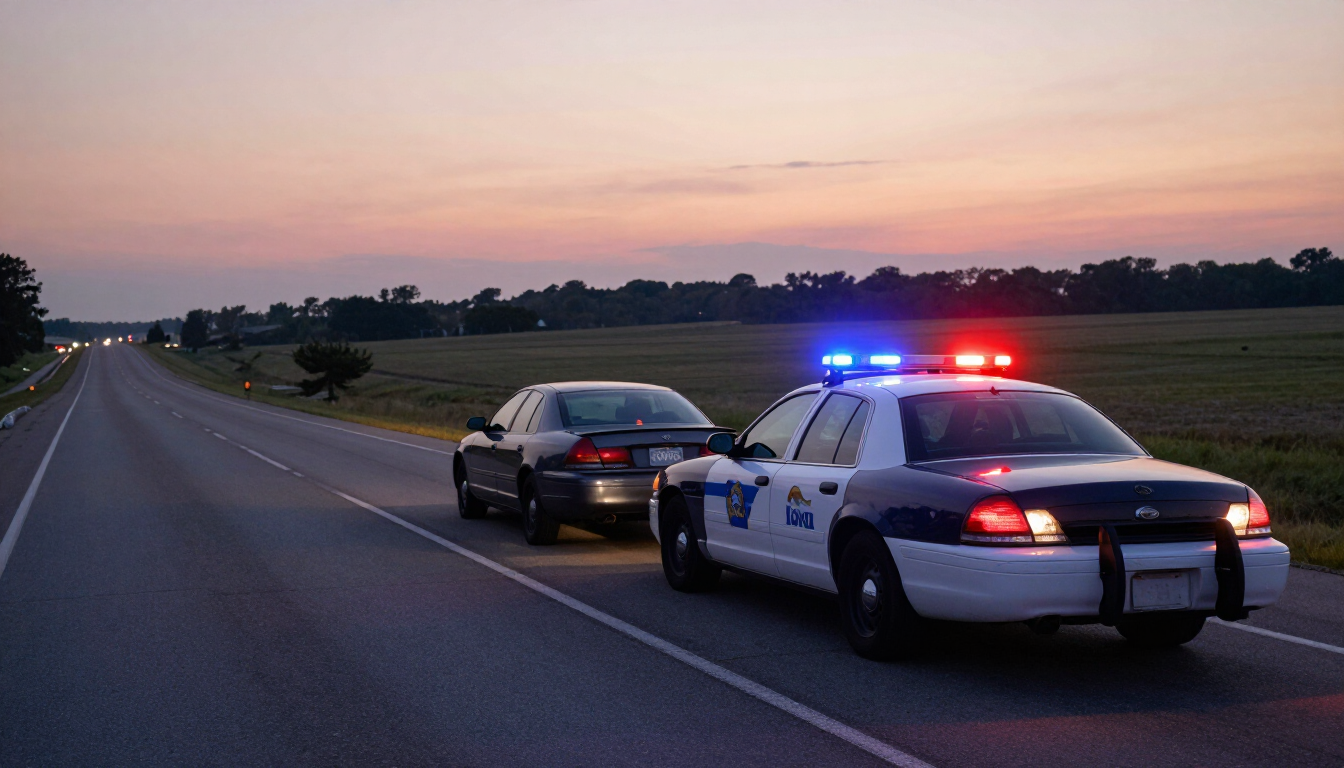
Driving through the streets of Davenport or along the highways of Scott County comes with a set of unspoken agreements. Most drivers aren't thinking about the fine print of the Iowa Code when they get behind the wheel, but the moment blue lights appear in the rearview mirror, those legal nuances become incredibly important. When an officer suspects you are Operating While Intoxicated (OWI), you are immediately thrust into a complex legal framework known as "implied consent." At Koos Law, led by attorney Gary Koos, we frequently see clients who are confused by the conflicting information they receive on the side of the road.
Navigating an OWI charge in Iowa is a two-front war: one against the Iowa Department of Transportation (DOT) regarding your driving privileges and another in the Scott County District Court regarding criminal penalties. Understanding how a refusal to provide a breath, blood, or urine sample affects both of these fronts is the first step in building a robust defense. This guide explores the reality of Iowa OWI refusal, the weight of implied consent, and how a dedicated OWI / DUI Defense strategy can help protect your future.
What is Iowa’s Implied Consent Law?
In the State of Iowa, the privilege of operating a motor vehicle is conditioned upon your consent to chemical testing. This is the heart of Iowa Code Section 321J.6. By the simple act of driving on Iowa roads, you have already legally "implied" that you will submit to a breath, blood, or urine test if a peace officer has reasonable grounds to believe you are operating while intoxicated.
However, the police cannot simply demand a sample from anyone at any time. For implied consent to be invoked, specific conditions must be met. These usually include:
- The officer has lawfully placed the person under arrest for OWI.
- The person was involved in a motor vehicle accident involving personal injury or death.
- The person refused to take a preliminary breath test (PBT) on the side of the road.
- The PBT was administered and indicated an alcohol concentration of .08 or more.
It is important to distinguish between the Preliminary Breath Test (PBT) and the evidentiary breath test (the DataMaster). The PBT is a handheld device used during the initial stop to help the officer determine if there is probable cause for an arrest. Refusing the PBT is a factor the officer can use to justify an arrest, but it does not carry the same heavy license revocation penalties as refusing the formal evidentiary test at the station. When people speak of "Iowa OWI refusal," they are almost always referring to the refusal of the evidentiary test after being taken to the police station or jail.
Immediate Consequences of Refusing a Breath Test
When you are at the station and the officer requests a formal breath sample, the stakes rise significantly. If you choose to refuse, the administrative consequences are swift. Under Iowa Code Section 321J.9, a first-offense refusal results in a mandatory one-year revocation of your driver's license. This is significantly longer than the 180-day revocation typically handed down for a first-offense OWI where the driver fails the test (blows over .08).
If you have a prior OWI-related revocation on your record within the last twelve years, a refusal will trigger a two-year license revocation. These revocations are handled by the Iowa DOT and are independent of whatever happens in your criminal case. You could potentially win your criminal trial and still be prohibited from driving for a full year due to the refusal.

Can You Win an OWI Case if You Refuse the Test?
One of the most common myths in Scott County is that refusing the breath test is an automatic admission of guilt. This is factually incorrect. While the prosecution can mention your refusal during a trial to suggest "consciousness of guilt," a refusal does not provide the state with the scientific number (.08 or higher) that they usually rely on for an easy conviction.
Without a breath or blood sample, the prosecution must prove impairment through other means, such as:
- Observations of your driving behavior (swerving, speeding, or erratic braking).
- Physical symptoms noted by the officer (slurred speech, bloodshot eyes, or the odor of alcohol).
- Performance on Standardized Field Sobriety Tests (SFSTs) like the One-Leg Stand or Walk-and-Turn.
- Statements you made to the officer during the stop.
At Koos Law, Gary Koos analyzes every detail of the stop to see if the officer followed proper protocol. If the initial traffic stop was illegal—perhaps the officer lacked reasonable suspicion to pull you over—any evidence gathered afterward, including the fact that you refused a test, might be suppressed. In many cases, a refusal makes the prosecution's job harder because they lack "the number," allowing an experienced defense attorney to create reasonable doubt by highlighting your physical coordination and clear communication during the interaction.
Defending Against Missed Implied Consent Advisories
Before an officer can penalize you for a refusal, they must read you the "Implied Consent Advisory." This is a standardized form that explains the consequences of both failing the test and refusing the test. In Iowa, this is a critical procedural safeguard. If the officer fails to read this advisory, or if they misstate the consequences in a way that misleads you, the resulting license revocation can often be overturned.
Common defense avenues involving the advisory include:
- Failure to Read: The officer completely bypassed the advisory process.
- Inaccurate Information: The officer gave legal advice that contradicted the written advisory.
- Right to Counsel: In Iowa, under State v. Vietor, you have a limited right to contact a family member or an attorney before deciding whether to take the test. If the officer denies you a phone call after you’ve requested one, the refusal may be invalidated.
- Language Barriers: If the driver does not speak English and no effort was made to provide a translated advisory, the consent or refusal may not be considered "voluntary and knowing."

How Does Refusal Impact Your Criminal Trial in Scott County?
In the Scott County District Court, an OWI charge is typically pursued under two theories. The first is the "per se" violation, which means driving with an alcohol concentration of .08 or more. If you refuse the test, the state cannot charge you under this theory. Instead, they must proceed under the "under the influence" theory, which requires proving that your ability to operate a vehicle was impaired by alcohol or drugs.
This shift in strategy changes the dynamic of the trial. The jury won't see a laboratory report with a high number; instead, they will see bodycam footage and hear officer testimony. This is where the quality of your Criminal Defense Overview becomes paramount. We focus on the "positives" in the video: did you pull over safely? Were you polite? Did you exit the vehicle without stumbling? When a jury sees a person acting normally, the lack of a breath test often works in the defendant's favor, as the "proof" of impairment is purely subjective.
Strategic Differences: To Blow or Not to Blow?
There is no one-size-fits-all answer to whether you should refuse a breath test. Every OWI stop in Davenport is unique. However, there are strategic differences that every driver should consider. Providing a sample that is over the limit usually results in a shorter license revocation but provides the state with nearly ironclad evidence for a criminal conviction. Refusing the test protects your criminal record by denying the state scientific evidence but guarantees a longer period without a standard driver's license.
Key considerations for your strategy include:
- The 12-Year Rule: Iowa looks back 12 years for prior OWI offenses. If this is your second or third OWI, the penalties for both blowing and refusing skyrocket.
- Commercial Drivers: If you hold a CDL, a refusal can be devastating to your career, often resulting in a lifetime disqualification for a second OWI-related incident.
- The Temporary Restricted License (TRL): Even if your license is revoked for a refusal, you may still be eligible for a TRL (work permit). This usually requires the installation of an ignition interlock device (IID) in your vehicle.

Summary of Iowa OWI Refusal and Implied Consent
Dealing with an OWI in Davenport or Scott County is a stressful experience, particularly when faced with the high-pressure decision of whether to submit to chemical testing. Understanding that the implied consent law creates an administrative penalty for refusal is vital, but so is knowing that a refusal is not the end of your legal battle. By challenging the procedures used by law enforcement and holding the state to its burden of proof, you can fight to protect your record and your future.
Key Takeaways:
- Implied Consent: You've already agreed to testing by driving on Iowa roads.
- Refusal Penalty: Expect a 1-year license revocation for a first-time refusal.
- No Automatic Guilt: Refusal is not a conviction; the state must still prove impairment.
- Procedural Defenses: Errors in the implied consent advisory can invalidate revocations.
- Legal Guidance: Always consult an attorney regarding your eligibility for a work permit.
If you are facing an OWI charge in Davenport, Bettendorf, or anywhere in Scott County, don't navigate the system alone. Contact Koos Law today for experienced, local representation. Call us at 563-275-8820 to discuss your case and begin building your defense.
Recent Posts